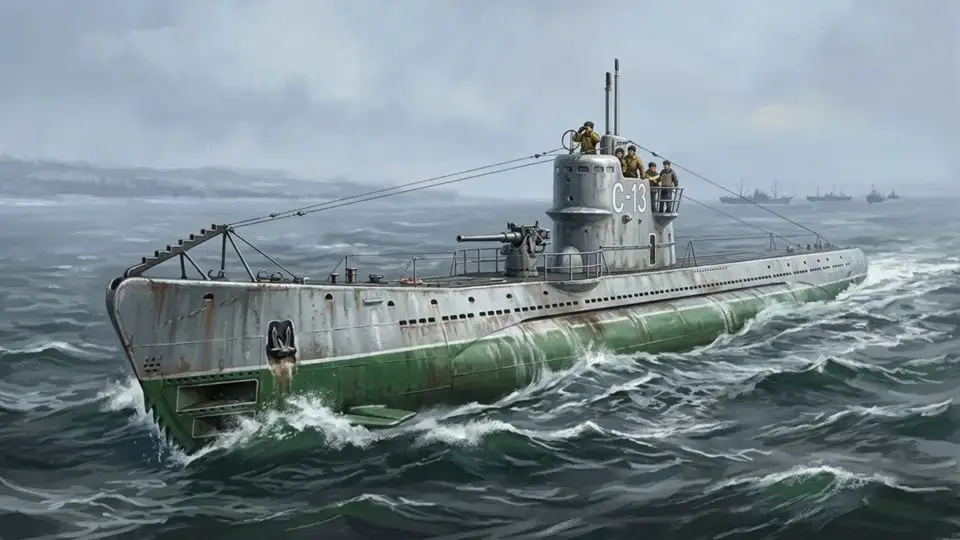
S-13 Soviet Submarine (1939)
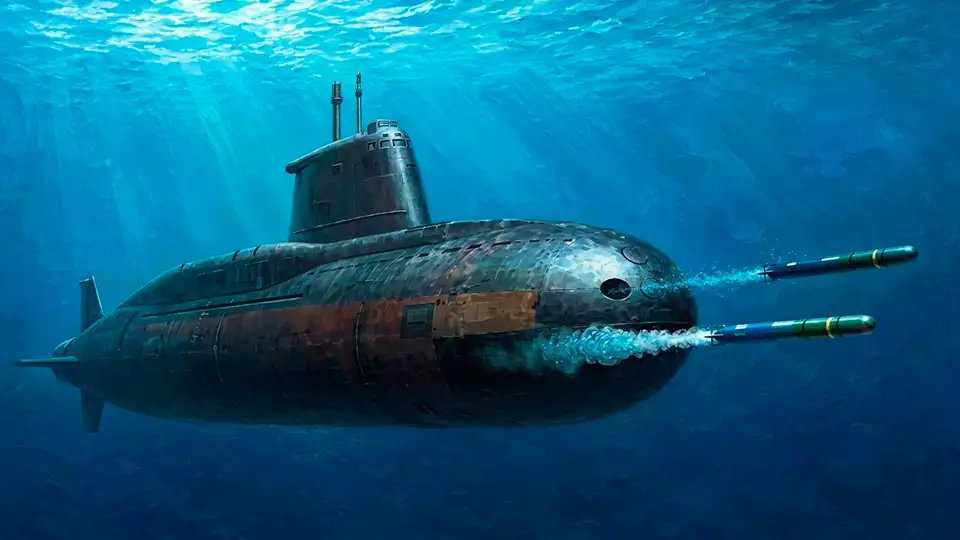
The S-13 (Series IX-bis) was a Soviet diesel-electric torpedo submarine from the World War II era; it was a medium-sized, double-hulled vessel with a partial raised-deck design, engineered for effective operations against enemy sea lines of communication. The submarine's steel pressure hull was divided by flat pressure-resistant bulkheads into seven watertight compartments, ensuring high crew survivability and the maintenance of buoyancy even if one compartment flooded. The vessel measured 77.7 meters in length and 6.4 meters in beam, with a mean draft of 4.06 meters and a submerged displacement of 1,090 tons. Its propulsion system consisted of two 1D diesel engines (2,000 hp each) for surface running and two PG-72/35 electric motors (550 hp each) for submerged movement; these drove two propellers, providing a top speed of 19.5 knots on the surface and 8.7 knots submerged. The submarine’s armament comprised six 533mm torpedo tubes—four bow and two stern—with a total load of 12 torpedoes, as well as a deck-mounted 100mm B-24PL gun and a 45mm semi-automatic 21-K dual-purpose gun mounted on the conning tower fairing. Housed within the pressure hull were a 124-cell storage battery, main ballast tanks, fuel and oil tanks, radio communication equipment, a hydrophone array, and air regeneration systems. Thanks to an optimal combination of seaworthiness, an operational range of up to 9,500 miles, and a powerful torpedo and artillery armament, the S-13 was one of the most successful ships of the Soviet Navy, renowned for its historic, victorious attacks in the Baltic Sea.
Model Information
Anton Dubina
In Progress
Ship
In Development
TBA