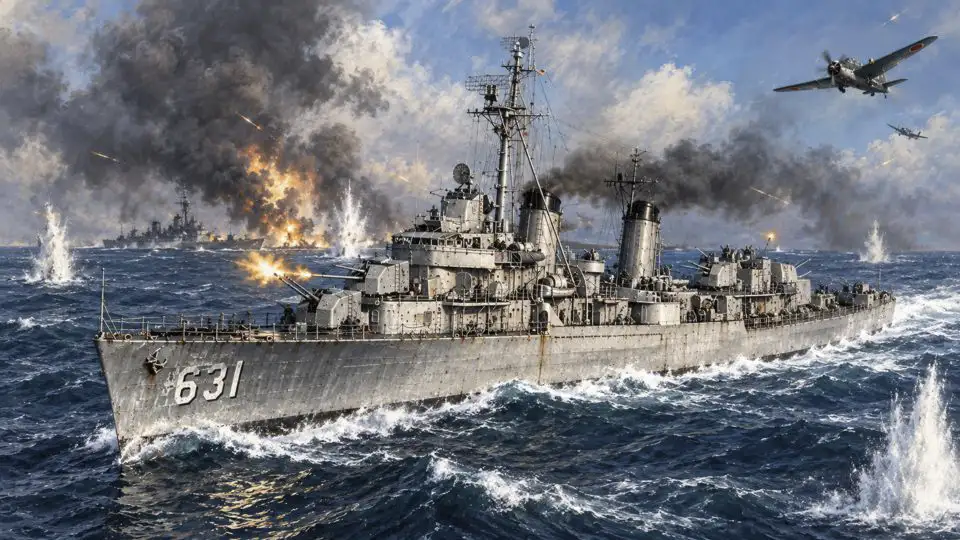
Fletcher-class destroyer (1941)
Fletcher-class destroyer is a series of American destroyers developed in the late 1930s and adopted by the US Navy in 1942. Ships of this type had a length of about 114.7 m, a width of 12.1 m and a standard displacement of approximately 2050 tons. The hull was distinguished by a relatively simple and robust design with a high freeboard, which ensured good seaworthiness and stability during long passages. The power plant included four steam boilers and two steam turbines with a total capacity of about 60,000 liters. s., rotating two propellers. The maximum speed reached approximately 36 knots. The main artillery armament initially consisted of five universal 127 mm Mk 12 guns in single enclosed mounts, capable of firing at both surface and air targets. The torpedo armament consisted of two five-tube 533-mm torpedo tubes, and 40-mm and 20-mm automatic guns were installed to combat aircraft and small ships. The ships were also equipped with depth charges and submarine detection equipment. During the Second World War, the composition of the weapons and electronic equipment of individual destroyers was repeatedly changed taking into account combat experience, including the strengthening of anti-aircraft artillery and the installation of modern radar stations. The Fletcher-class was created as a universal warship for escorting aircraft carrier formations, anti-submarine defense, artillery support for landings, torpedo attacks and independent operations. Destroyers of this type were actively used in the Pacific theater of operations, where they took part in major naval battles, covered aircraft carriers and transports, provided fire support for landings and operated in conditions of intense air and surface attacks.
Model Information
Anton Dubina
In Progress
Ship
In Development
TBA