10.02.2026
Battery pack
technology, batteries
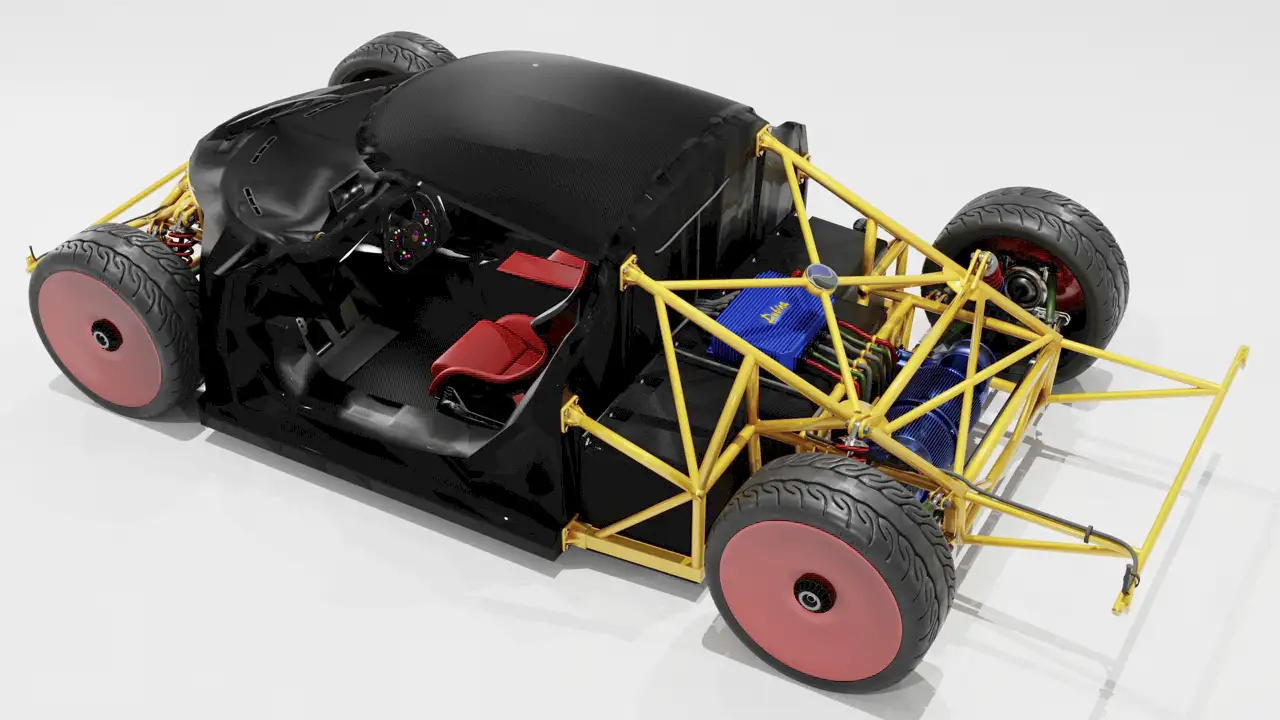
The battery pack consists of high-efficiency, high-energy-density cy-lindrical cells with NMC (Nickel-Manganese-Cobalt) lithium-ion chemistry, fea-turing a graphite anode and a lithium cobalt cathode. The battery pack is comprised of 16 modules, each with a nominal voltage of 25 V. Sixteen battery modules are connected in series to form a pack with a nominal voltage of 400 V. Each battery module consists of 360 "18650" cells, which closely resemble standard AA batteries (the weight of a single cell is 45 g), connected in a 6s60p configuration—6 cells in series and 60 such groups in parallel. The energy capacity of each battery module using these cells is 5.3 kWh. In total, the battery pack contains 5,760 such cells. For operational convenience, the battery has a voltage of 400 V, achieved through a mixed connection of the cells. Parallel connection of cells is used to obtain higher current at the same voltage. Series connection—where cells are connected sequentially, the posi-tive terminal of one to the negative of another—is used to obtain higher voltage at a constant current. In this case, the total current strength will equal the max-imum allowable current for each cell. In a mixed connection, elements are con-nected in parallel into groups, which are then connected in series. When as-sembling cells into a battery, it is vital to remember that the battery will function properly only if all constituent cells have identical capacity and voltage. Dis-crepancies in the parameters of individual cells, especially when connected in parallel, can lead to premature failure of the entire battery and a decrease in its efficiency.