Helicopter crane
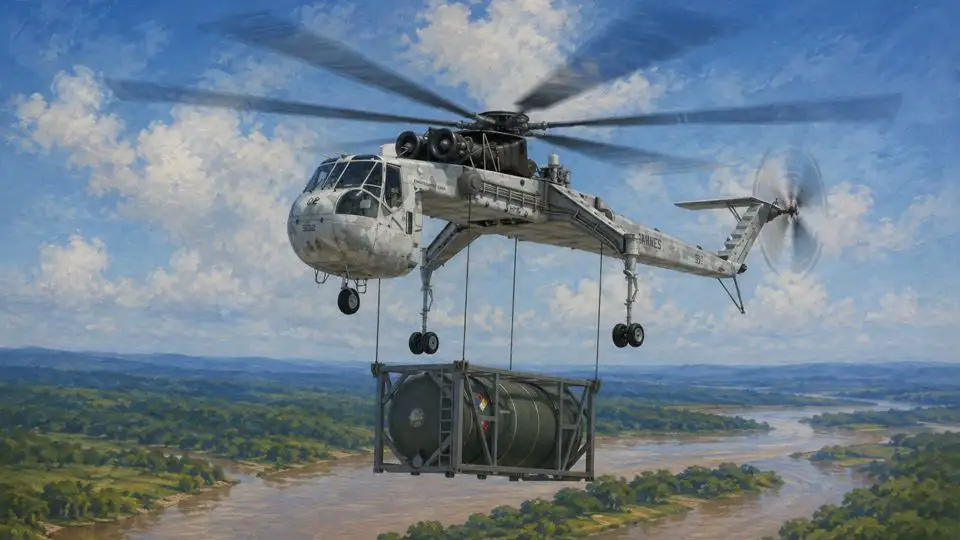
A heavy twin-engine flying crane helicopter designed specifically for transporting oversized and ultra-heavy external loads, as well as for firefighting, power line installation, construction, and logging operations. Its design features a robust space-frame fuselage with an open underside, a twin-boom tail configuration, high-clearance landing gear, and a powerful three-blade tail rotor system; primary lift is generated by a four-blade composite main rotor with a 23-meter diameter. The powerplant consists of two gas-turbine engines, each transmitting power through a main gearbox to a common drive system for the main and tail rotors; total available power reaches approximately 9,600 hp. In the event of an engine failure, the remaining unit can deliver up to 4,800 hp for 30 minutes, enabling continued flight under specified conditions. Extensive cockpit glazing provides the crew with a clear view of the load and the work area. The maximum takeoff weight is approximately 21,500 kg, with an allowable external load capacity of up to 11,500 kg. Maximum cruising speed is around 195 km/h, and the range extends to 230 nautical miles (including fuel reserves). A key feature of the helicopter is the cargo hook located beneath its center of gravity. The load is secured to the suspension system, where main rotor thrust counteracts the load's weight, while the pilot controls the helicopter's and the load's position to precisely move and place the object. Anti-rotation devices, suspension elements, and specialized cargo systems can be employed to stabilize the suspended load. The helicopter can be equipped with a fire-fighting tank, water and foam cannons, a winch, grappling devices, and other specialized modules, transforming it into a heavy-duty, multi-functional aerial platform. It is capable of precision placement of heavy structures in locations where the use of ground-based equipment is impossible.
Model Information
Anton Dubina
In Progress
Helicopter
In Development
TBA