10.02.2026
Double wishbone suspension
design, suspension
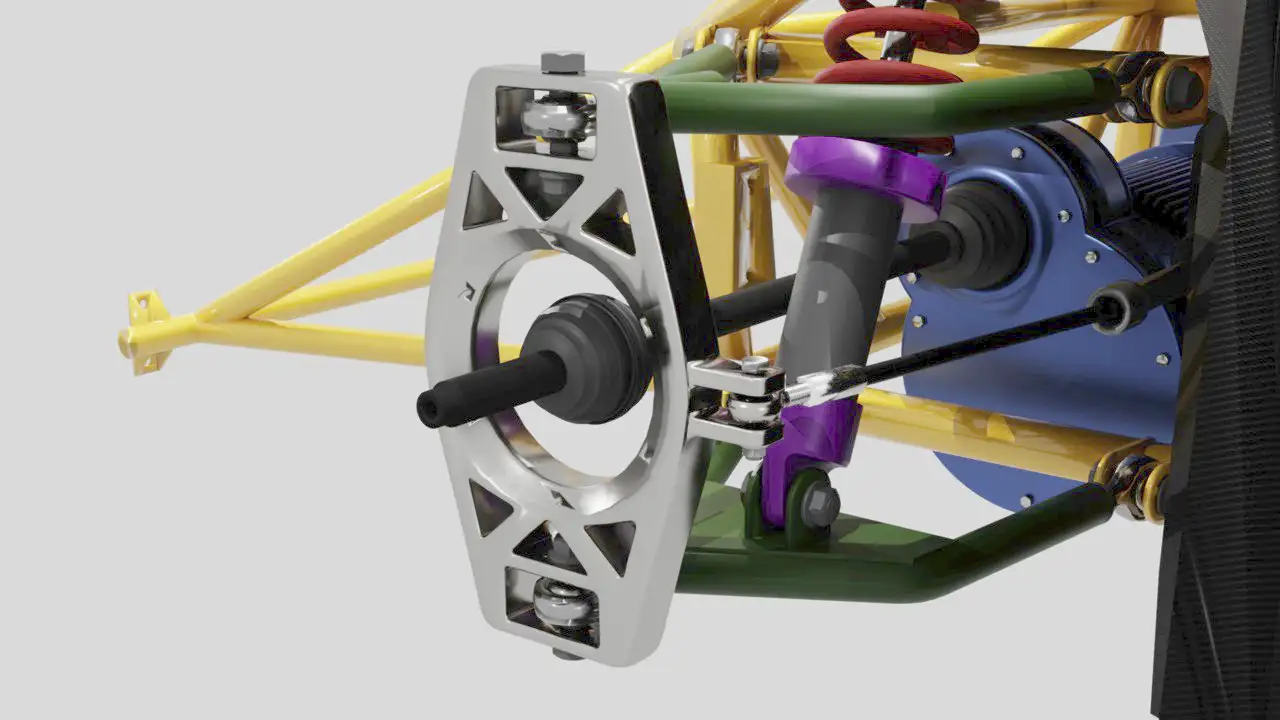
Unlike other types of suspensions, the construction of the double-wishbone suspension offers a more progressive geometry. The more the double-wishbone suspension is compressed, the greater the negative camber will be, which is achieved thanks to the use of arms of different lengths. This has a positive effect on handling at moments when the car travels at high speed in a corner and the car begins to slide off the trajectory. At these moments, the double-wishbone suspension system will maintain better tire contact with the road, which means the car will be more stable. An additional plus of the double-wishbone suspension is con-sidered to be the smaller dimensions of the upper arm relative to the lower one. In connection with this, during the upward movement of the wheel, the camber angle changes, as a result of which the plane of the wheel remains perpendic-ular to the road surface even during body rolls. In general, depending on the length and the arrangement of the A-shaped arms themselves, one can adjust the camber and toe angles. The guiding de-vice of the suspension consists of the lower and upper arms, the elastic device consists of coiled cylindrical springs, the damping device consists of double-acting gas-spring shock absorbers, and the anti-roll bar is an elastic U-shaped rod. The upper and lower suspension arms are installed across the car and have longitudinal axes of oscillation. The axis of the lower arm and the upper arm are attached to a bracket on the frame. The inner ends of the upper and lower arms are connected to the axes by ball joints.